Reference integration · Development demonstrator

BLACKBODY exercises
the host boundary under pressure.

A real-time fleet simulation provides a demanding reference host for bounded observation, typed command proposals, native policy, asynchronous arrival, lifecycle control, and replay.

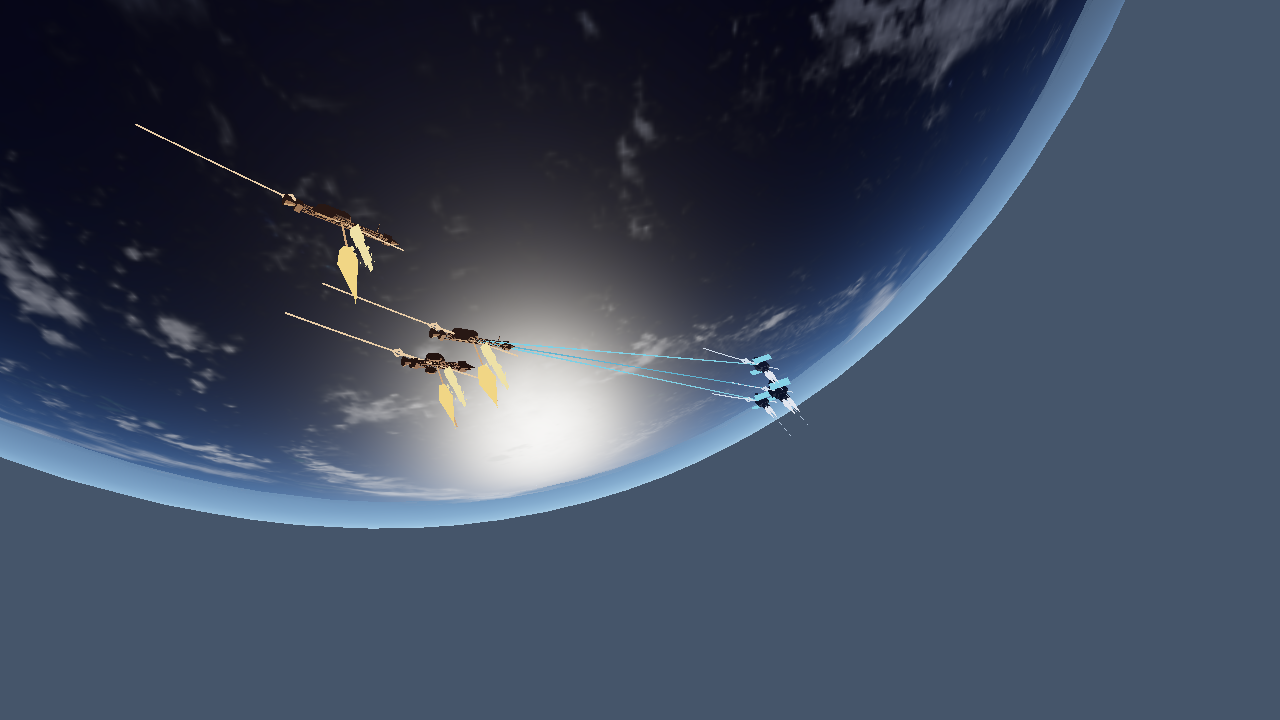
BLACKBODY development demonstrator showing two fleets in the simulation view
Repository-owned reference capturePresentation context · Not model-performance evidence

Reference trace

The simulator remains authoritative from tick to artifact.

The trace records explicit system facts. It does not expose or require hidden model reasoning.

  1. 01

    Fleet observation

    The simulation exposes a bounded view for one commander identity at one host-owned decision tick.

  2. 02

    Fleet order

    The runtime parses a typed order proposal tied to that commander; foreign or malformed identity is rejected.

  3. 03

    Native admission

    BLACKBODY applies its own timing, ownership, target, and action policy before state mutation.

  4. 04

    Arrival record

    Accepted and rejected arrivals are ordered against the match clock; final meter and lifecycle state settle before output.

  5. 05

    Replay identity

    The authoritative accepted stream and match provenance identify the deterministic simulation replay.

Implemented

What this demonstrates

  • A nontrivial host can keep state, time, identity, policy, and consequence outside the model.
  • Typed proposals can cross authenticated loopback transport into deterministic native admission.
  • Two distinct commander loops can share one supervised two-slot child without collapsing their identities.
  • Worker lifecycle, process reap, meter drainage, provenance, and replay identity can be artifact prerequisites.
Model evidence pending

What this does not demonstrate

  • GGUF loading, model inference, reasoning quality, combat performance, or general-purpose judgment.
  • Real-model parallelism, crash restart/backoff, or a distributable pinned model-host package.
  • A product-wide offline or no-egress posture; that belongs to a named measured deployment.
  • Accreditation, certification, authorization, customer acceptance, or government endorsement.

Two fleet commander loops through one shared sidecar host.

A retained development fixture assigned each fleet a separate commander identity, admitted both through one two-slot supervised child, recorded accepted typed intent proposals for both sides, and required clean worker and process teardown before match artifacts were published.

The responder was deterministic fixture code, not a decision model. The run proves application wiring, authenticated transport, shared residency mechanics, identity separation, and lifecycle ordering. A named GGUF/model run is still required before any claim about model behavior or paired AI fleets.

See the deployment acceptance path

Start with the mission boundary

Bring the system you trust.
We’ll map governed agents around it.

Keep all initial inquiries unclassified and non-sensitive. Do not send controlled data, credentials, export-controlled material, or system artifacts through the public website.

Schedule a mission briefing